

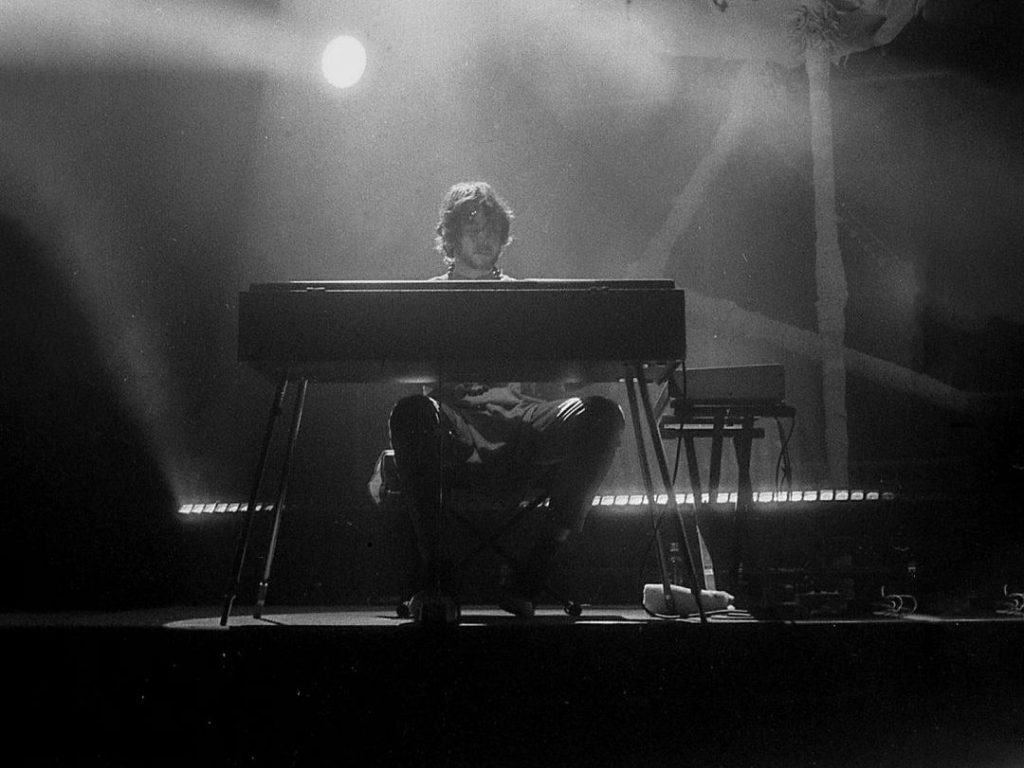
Over the past ten years or so, Dominic J. Marshall has built an impressive CV, which features playing on stage at Glastonbury and the Montreux Jazz Festival with the Cinematic Orchestra, and performing alongside Moses Sumney, Lojay and the Metropole Orkest. This February, Marshall has released his sixth studio album: Fire-breathing Lion.
Fire-breathing Lion is an entirely self-written and self-produced piece of work, making it 100% the product of the piano virtuoso’s (to echo the words of Jamz Supernova) creativity and skill. A jazz album at its core, the resultant record is brimming with authenticity, with every element created and controlled by Marshall. From acoustic piano to synth bass, Moog melodies to bass guitar, and Fender Rhodes to electronic drums, Marshall is the definition of a multi-instrumentalist.
Despite being a one-man job, Fire-breathing Lion is an eclectic and exciting album, which explores numerous themes and evokes an extensive array of emotions. “Every track had a slightly different inception,” Marshall tells me. “A Herd Confused, I wrote at the piano in summer, 2022. It had lyrics at first, but they were silly – kind of a joke. That’s why the melody has a playful feel to it.”
“Beltane was originally a piano improvisation I recorded on a voice-note. I didn’t have time to develop it then. In fact, I was trying not to compose any music, but the chords sparked something so I saved them for later.”
Speaking of Mephistopheles, Marshall says: “to begin with, I played the bass and drum parts on my laptop keyboard. I’d just moved out of a very toxic living situation, so there’s a darkness to that tune.”
“I remember I programmed the drums for Lysianassa on a little pocket drum machine during a gig. It was at this venue in Soho that I am definitely not a fan of, so I would come outside and make drum loops in between the sets. I find musical ideas have a tendency to appear when your attention is on something else. It’s strange.”
It’s clear Marshall’s music is reflective of himself: A Herd Confused definitely has a summery feel to it, and Mephistopheles’s repeating bassline does have a mild ominosity to it, to highlight just two examples.
“I try to keep my music from the heart,” Marshall tells me. There was no particular vision entering the process: “I just want to make things sound good,” he continues.
“On a really good day I might have 2 or 3 moments when I ask myself ‘should I record this?’ I’m very strict here, so most of the time I don’t. But in the event it does get saved, I’ll come back to it again and again, adding all manner of layers. I take a much more experimental approach in this phase, trying not to judge what comes out. I will say the best ideas challenge me to go further than I want to.”
Marshall possesses a distinct openness surrounding his visions and inspirations, which come from all corners of the creative world, incorporating elements of both the auditory and physical arts. “There’s something unrealistic, or demanding, about getting inspired,” he tells me. “It gives you a mission, sets you a task. Inspiration wants you to level up, so it sends you ideas you often don’t comprehend at first. But to me that’s the funnest thing about being a musician.”
Inspirations come to Marshall in many forms, and not limited to simply the musical. He cites an eclectic lists of inspirations, including the likes of: legendary jazz keyboardist Herbie Hancock; Japanese manga artist Kentaro Miura; French impressionist composer Maurice Ravel; and the late, great filmmaker, artist and musician David Lynch.
This list may seem like a slightly random assortment of undoubtedly brilliant creative minds, but to Marshall, there is a certain link. “To me, what those artists have in common is that they’re ‘world builders’,” Marshall tells me. “When I listen to Herbie’s 70s stuff, I don’t really care whether the piece ends on a major or a minor chord, or what time signature the piece is in. I’m just immersing myself in the piece. That’s similar to Kentaro Miura. It doesn’t feel like you’re reading a manga; it feels like you’ve stepped into his world, and when you close the book you step back into the real one. The characters are so strong. They seem to have an identity besides what’s on the page. Ravel – the same thing. His songs don’t sound like music; they sound like his world. David Lynch is similar. He was a master of blending the otherworldly with the mundane.”
Marshall’s clear love for the physical arts definitely translates into his work. Similarly to that of his inspirations, his work undoubtedly takes you on a journey across realms. The multi-isntrumentalist isn’t afraid to explore the playful, the moody, and the slightly weird, with plenty of detours inbetween.
“I think music is a pretty good translator of the other art forms,” says Marshall. “If you stare at a Van Gogh painting for 20 minutes, you can write a song after that, because there’s an image behind the image that permeates you.”
“It might sound like a mystical thing to say, but there’s more to the painting than what the mind sees. Music touches on exactly those unconscious aspects, so it’s the perfect go-between visual art, film and books. Anyone who’s seen me perform knows I love playing with my eyes closed. But they probably don’t know I actually prefer practising in the dark. The eye – it wants to analyse the world. The eye shows us a series of objects to be manipulated, instead of the full picture, which is an unknowable world full of mysteries. Schopenhauer wrote books about this.”
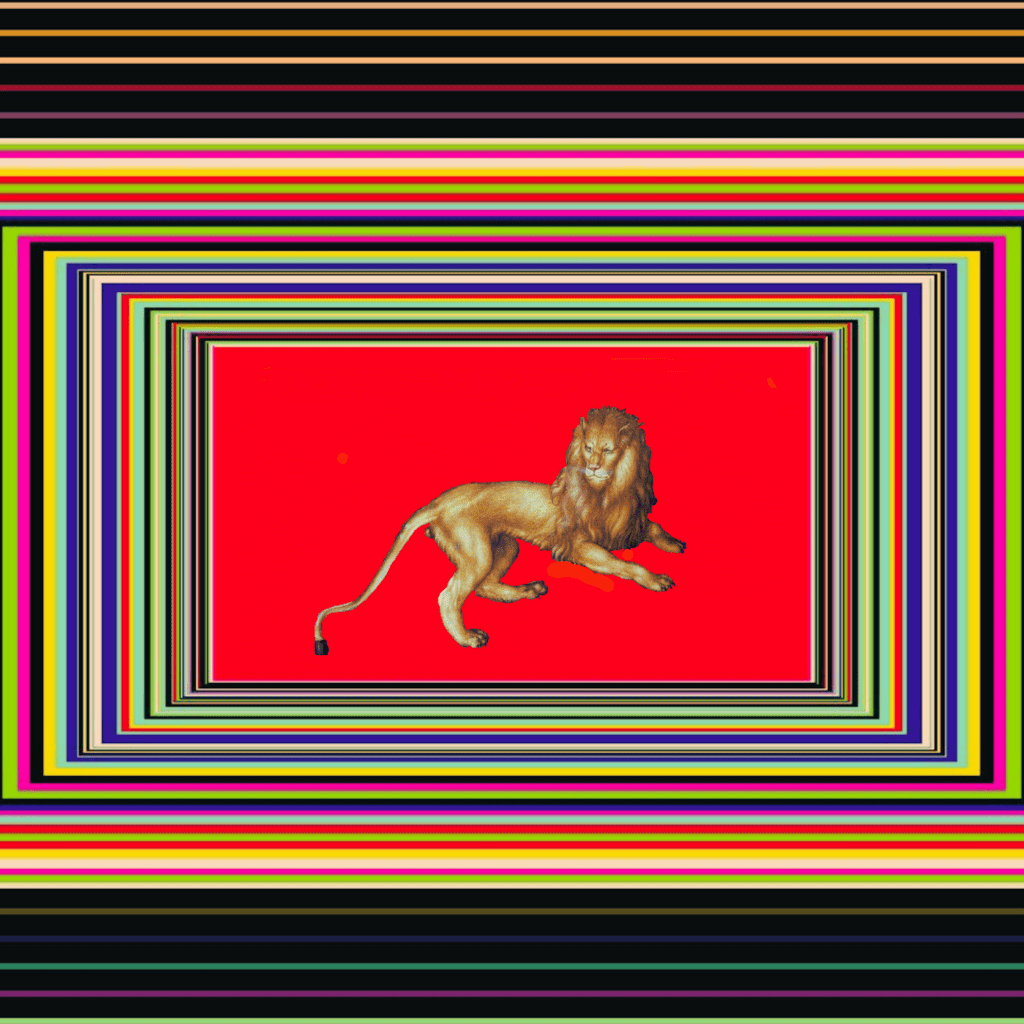
The medium of physical art is also expressed directly through the album’s intriguing name and artwork. “In astrology, I’m an Aries, and in Ayurveda I’m Pitta Dosha, which are both fire types,” Marshall says, “so the title was always going to be something related to fire. The Lion represents nature & femininity; fire represents technology & masculinity. So Fire-breathing Lion symbolises society’s ideal equilibrium, the kind of society I’d like to move towards, where we honour the wild untameable aspects of nature as well as hard work and ingenuity. Two songs from the album, The Wild Bull and Taurus Demon, also represent these two complementary aspects of our higher self, though they are presented separately here.”
The complexity of Marshall’s music provides a slightly psychadelic air, whilst rooted in jazz and electronica. Having been a staunch member of the UK jazz scene for well over ten years, plenty of time has been afforded to develop his sound and identity, culminating in the sounds heard throughout Fire-breathing Lion.
“Playing with Cinematic Orchestra made me want to start singing,” Marshall says, “because the singers would always get a lot of applause on that gig; you don’t realise how vain you are until you’ve played in front of a thousand people. The singers got to stand right in the middle of the stage holding eye contact with the audience,” he continues, “that seemed pretty fun to me. The knock-on effect was I had to slow everything down when I was teaching myself to sing, and that helped me to hear melodies more clearly. There are no vocals on this record, but some of the melodies were written to words.”
The final product is a wondrous amalgamation of jazz and electronica, with the melodies heard throughout the album’s 16 compositions ranging from the playful to the bizarre. Marshall’s keyboarding prowess takes centre stage at various points in the record, whilst his compositions, driving rhythms, and layering of various instruments all shine through in others passages. The album’s 16 tracks each clearly mean something different to Marshall, and all bring their own star qualities to the production.
Discussing which pieces Marshall would play for someone for their first experience of Fire-breathing Dragon, he tells me: “If it was someone on the street, I might play them Lysianassa because I like the energy. That piece took on a whole life of its own. At one point it was a bunch of musical notes in an Ableton file, and the next it was a tidal wave consuming the whole room. I don’t know what changed, but it had to happen.”
Lysianassa is certainly one of the album’s driving tracks, and one which has it all, from its syncopated synth drums and bass parts, to the catchy melody on the keys.
“Gottfrauen would be my go-to if I knew the person well, because it encapsulates my sound I guess.” This piece has a slight ethereal feel to it, but driven by a groovy underlying bassline, and a more traditional jazzy keys feature.
“If I wanted to find out more about someone, I might play them The Three Angels just to gauge their reaction. After the 3 minutes I’d have a pretty good impression of them.” Listening to The Three Angels, you can appreciate this perspective. Free-flowing and improvised, it’s a showcase of synth, which, whilst not really leaving 2nd gear, doesn’t need to. It benefits from this slower pace, which allows the melody to flourish.
You can catch Marshall playing the album at Notting Hill Arts Club in April with a full band, and sitting at the keys at Troy bar in Hoxton, every Friday.
Besides that, he’ll be spending time “writing music, recording the final movement of my Revelation Suite, practising C major arpeggio on bass, putting off starting a Chick Corea tribute band – the usual stuff.”
 Waxing Lyrical