

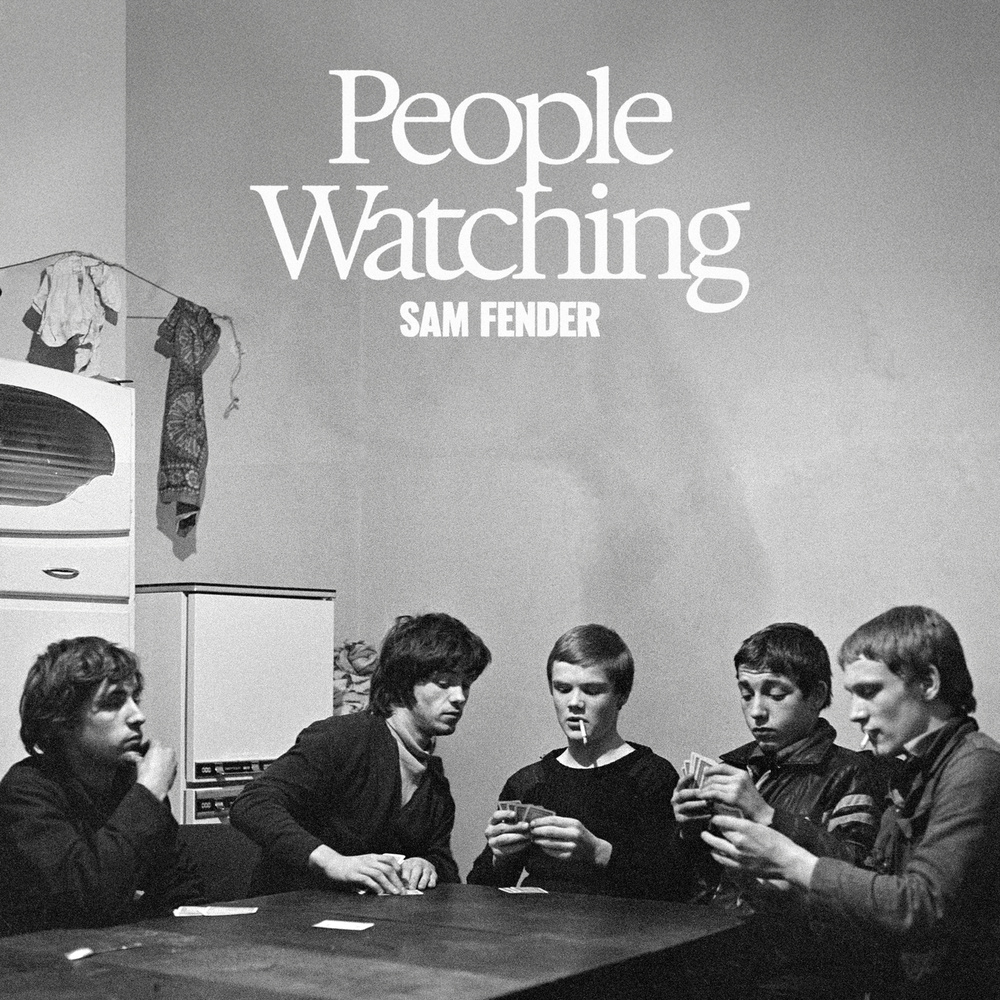
Over the last few years, Sam Fender has propelled himself to the very top of British rock music. The success of Hypersonic Missiles and Seventeen Going Under have created a Geordie legend, who, at the very top of his game, has just released his third album, People Watching. This album is, in some ways, a story of success. However it is overshadowed by a sense of pain, with Fender’s lyrics casting a light on the sombre struggles of his story and perspectives on injustice, hardship and modern life.
The resulting People Watching is an emotionally charged and heartfelt record. It’s a deeply troubled album, which connects in a powerful way through Fender’s immense storytelling to create tales defined by feelings of grief and guilt.
I’ve no doubt Fender is one of the greatest songwriters of our generations; his lyrical ability is so powerful, whether it’s through the stadium-lifting Seventeen Going Under, or more poignant The Dying Light, he has always had always the ability to cut deep with his words. People Watching is no different. What is different, though, are the stories told. Since the release of Seventeen Going Under in 2021, Fender has seen a phenomenal rise in fame, which has taken him away from his proud working-class, North-Shields roots. Throughout People Watching, Fender explores a number of new themes, and it is a clear reflection of the struggles he’s faced over the last few years.
Album opener and title track People Watching is, on the surface, an anthemic stadium banger. But soaked in the Springsteen spirit, Fender paints a picture of struggle. It features a textbook Fender bridge, with a hometown reference – ‘Kittiwakes etched your initials in the sky’ – which sets the scene for a triumphant final chorus and classic Johnny ‘Blue Hat’ sax solo.
Moving into Nostalgia’s Lie, Fender properly begins to explore the main underlying theme heard throughout this album, of course over another Springsteen-esque guitar riff and backings. He explores the turmoil of his recent years, where, despite all he has gained, there is a real sense of mourning. It’s quite a sad song, but yet again told through brilliant lyricism.
Moving through the 11-track album, every song is rooted in anguish and angst, solidifying the People Watching’s real sense of struggle. Fender explores themes of mental health, drugs, and disconnect from home, maintaining a real sense of solemness throughout his words. Presented over bluesy guitar licks, rocky rhythmic backings, and shrilling harmonica in places, the heartland rock influences shine through heavily, such as that of Adam Granduciel, of The War on Drugs, who was heavily involved in the production in this record. And of course, Bruce Springsteen.
‘I don’t wear the shoes I used to walk in, but I can’t help thinking where they’d take me’ – a line from Crumbling Empire, summarises Sam’s sentiment perfectly across these tracks and the album as a whole. It’s an expression of self-reflection, tinged with guilt and a sense of yearning.
‘My friends at home are in pain…can’t be responsible for everybody,’ from Chin Up, and ‘Every flagstone of this town bears our prints, and all the bars round here serve my ghosts and carcasses,’ from Rein Me In, are two other prime examples. Fender’s tales are fraught with hometown references immersed in hardship, and a cynical sense of longing.
TV dinner reminds me a little of White Privilege, from Fender’s debut album, Hypersonic Missiles, in its lyricism. It highlights Fender’s grievances and the unjust he sees in the world. He’s a star who has clearly struggled with his meteoric rise to fame, and with an anger towards those who sit above him – ‘They reared me as a class clown; Grass-fed little cash cow; I cashed out, headed hellbound; And now they point and laugh.’ This seems to have further fuelled Fender’s sense of gloom, and the apparent disconnect between himself and his roots.
Interestingly, I recently discussed this, in particular questioning the high-ticket prices for the People Watching tour, which seemed to contradict Fender’s image of a ‘working-class, Geordie hero of the people’. To me, the whole essence of People Watching seems to relate to these themes. Fender has no doubt faced struggles with his fame, the huge change this has had on his life, and how he sees home and himself. He encapsulates these feelings perfectly, in some places directly and in some, more indirectly.
Rounding off the album is Remember My Name. I could think of a thousand words to describe this album, but most prominently, it’s a simply beautiful track. A tribute to Fender’s late grandparents, it tells the story from the perspective of his grandfather, caring for his grandma, suffering from dementia. The emotion in Fender’s vocals pierces through, supported by a sublime backing from the Easington Colliery brass band. It would be easy for the brass backings to be overpowering here, but, as a result of Fender’s vocals and a masterful production, it works sensationally.
Remember My Name is an appropriate end to a mournful album. It’s easy to be distracted by the bluesy, stadium bound sounds, drenched in heartland rock and huge walls of noise. However, what’s more impactful is People Watching’s storytelling excellence. You simply cannot ignore Fender’s stories, and nor should you want to.
 Waxing Lyrical