
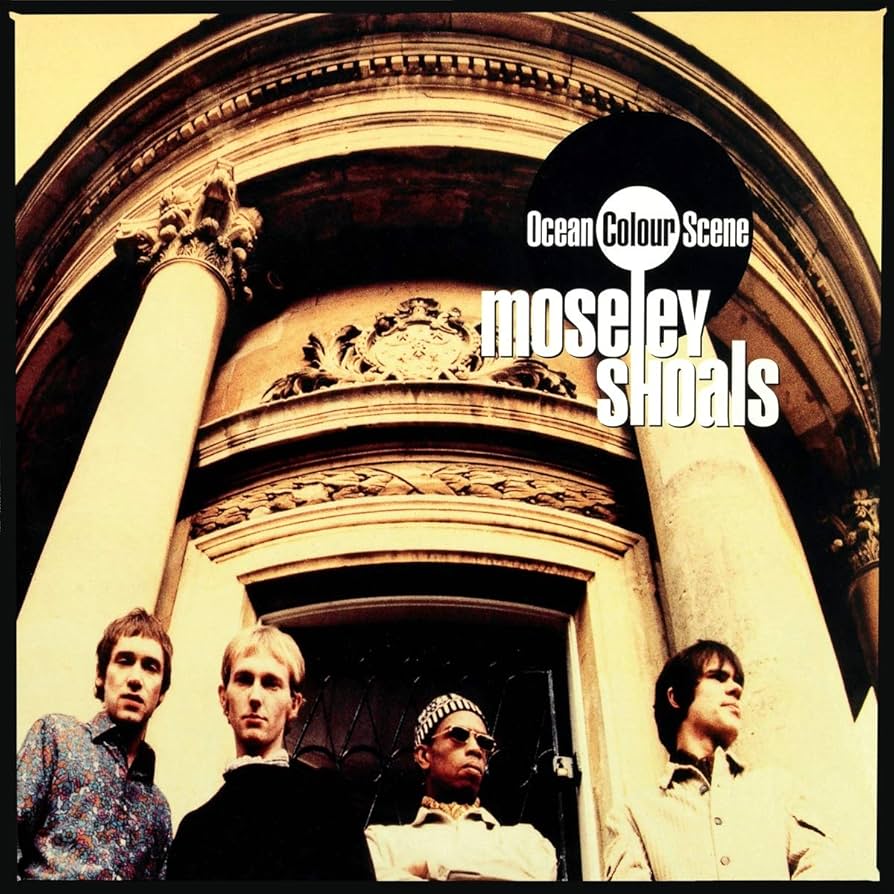

This week’s album takes us back to the pinnacle of the Britpop era, for a record I think is a little overshadowed by its peers, and subsequently a little underrated. The album in question is Ocean Colour Scene’s Moseley Shoals: the band’s second studio release.
The mid 90s was an incredible era for British rock music: 1994 saw the explosion of Oasis onto the scene with their debut Definitely Maybe, followed quickly by (What’s the Story) Morning Glory in 1995; Blur released three huge albums in three years in 1994, 1995, and 1996; and Pulp saw success with His n Her in 1994, and Different Class in 1995. All things considered, releasing a Britpop/indie/rock album in 1996 was a brave feat, especially when you look back on Ocean Colour Scene’s first album, an arguable slightly underwhelming debut, four years prior.
Undeterred, Ocean Colour Scene released Moseley Shoals in 1996, and it paid off. It was instantaneously more successful than its predecessor, peaking at number 2 on the UK Album Charts (beaten only by Take That’s Greatest Hits), before settling for a total of 92 weeks on the charts – the longest of any of their releases.
To me, this album is best defined by an immense list of singles, which truly are the best Ocean Colour Scene had to offer. The Riverboat Song, The Day We Caught The Train and The Circle, the album’s first three tracks in that order, are all immensely good, and some of my favourite songs from the 90s. The Riverboat Song notablytakes heavy inspiration from Led Zeppelin’s Four Sticks, implementing the same 6/4 time signature which gives the track its swingy but rigidly tight guitar riff.
As a whole, the album does have a certain soul-inspired edge to it, I feel. This is reflected in its name – Moseley Shoals. It’s a direct reference to Moseley, an area of Birmingham, and, perhaps more pertinently, Muscle Shoals, Alabama. Muscle Shoals is home to two iconic recording studios, responsible for a multitude of rock and soul hits in the 1960s and 70s: FAME Studios and Muscle Shoals Studio. Between them, they were the birthplace of music from the likes of Wilson Pickett, Arethra Franklin, The Rolling Stones, Paul Simon, Art Garfunkel and The Staple Singers. The opportunistic pun between ‘Muscle’ and ‘Moseley’ may have been the main reason for this choice of name, but I also like to think that there’s a nod to the group’s inspirations in here, too.
Part of the album’s edge is also undeniably down to the brilliant production courtesy of Brendan Lynch, who also contributed to albums from Paul Weller and Primal Scream. Lynch think did a fantastic job on this record – the production isn’t in your face throughout the whole album, but allows Ocean Colour Scene to flourish, whilst certainly enhancing the music throughout; The quiet passages are allowed to breathe, and the louder ones allowed to shout.
All in all, Moseley Shoals is a fantastic album, and whilst it may not have truly reached the heights or legendary status achieved by the likes of Oasis, Blur and Pulp, it does deserve a spotlight in the Britpop hall of fame, and is certainly up there in mine.
 Waxing Lyrical