
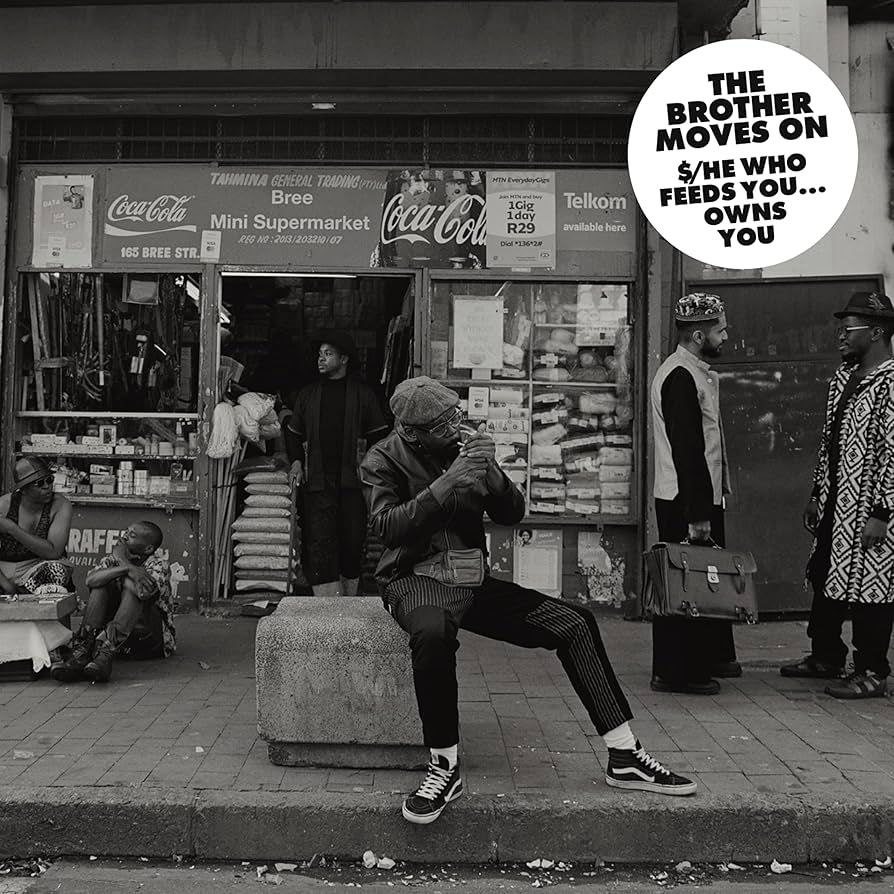

Some of the greatest albums made are those with a message, whether in protest or praise. This album expertly entangles meaning and message with music that both grooves hard and draws you in with masterful melodicism. Of South African origin, The Brother Moves On are a performance collective led by Siyabonga Mthembu, creating “transitional music for a transitional generation”. For those of you familiar with the UK powerhouse musician/reedist Shabaka Hutchings (a professor of many projects including Sons of Kemet and the Comet is Coming), TBMO are not far removed. In fact, this album was released back in 2022 under his record label Native Rebel Recordings. Their Afropresentist approach aptly aligns with Hutchings’ Afrocentric workings with a respect for tradition and hunger for innovation. Their music conveys the eclectic socio-political voices of 21st Century South Africa, embodying the communal spirit of young South African people born post-apartheid.
Puleng, the opening track, gently eases you in with a relaxed picked-through chordal passage on the guitar, joined later by a reedy sax, the sounds of birds and rain-like cymbal sizzles. This made a lot of sense to me when, after listening for the hundredth time ahead of writing this article, I searched the meaning of the title. Puleng, from what my millennial-type internet search discovered, means “out in the rain”; the peaceful sonority of the track provokingly juxtaposes common connotations of being caught in bad weather. As with Bayakhala (“they are crying”), this song acts as a metaphor carrying a message for the people of South Africa more generally for the wider world – one of resilience in hard times, confidence in the future and respect for the past. Tracks like Itumeleng Revisited (meaning “joy” or “luck” revisited) are much less abstract in their meaning and sound, with communal shouts, acoustic instruments and field-recording sounds of the outdoors being mixed in with electronic instruments and sequencers that create trance-like repeated patterns. The marriage of technology and tradition serves to challenge expectations and stereotypes of black South African music. More than this, I think that it offers an unchallengeable view into the potential near-future of a shared South African creative scene.
Instrumentally, this album reappropriates local and international musics in a way that dismantles discrete definitions of what South African music “should” sound like. Lyrically, TBMO bring themselves close to their political heritage; refrains like “Amanga Awethu” (“the lies are ours”, heard in Sphila) phonically and emotionally resemble chants sung by those in protest toward the government. Creatively, this album offers a wide range of styles and textures and that’s why its made Waxing Lyrical Album of the Week this week.
 Waxing Lyrical