
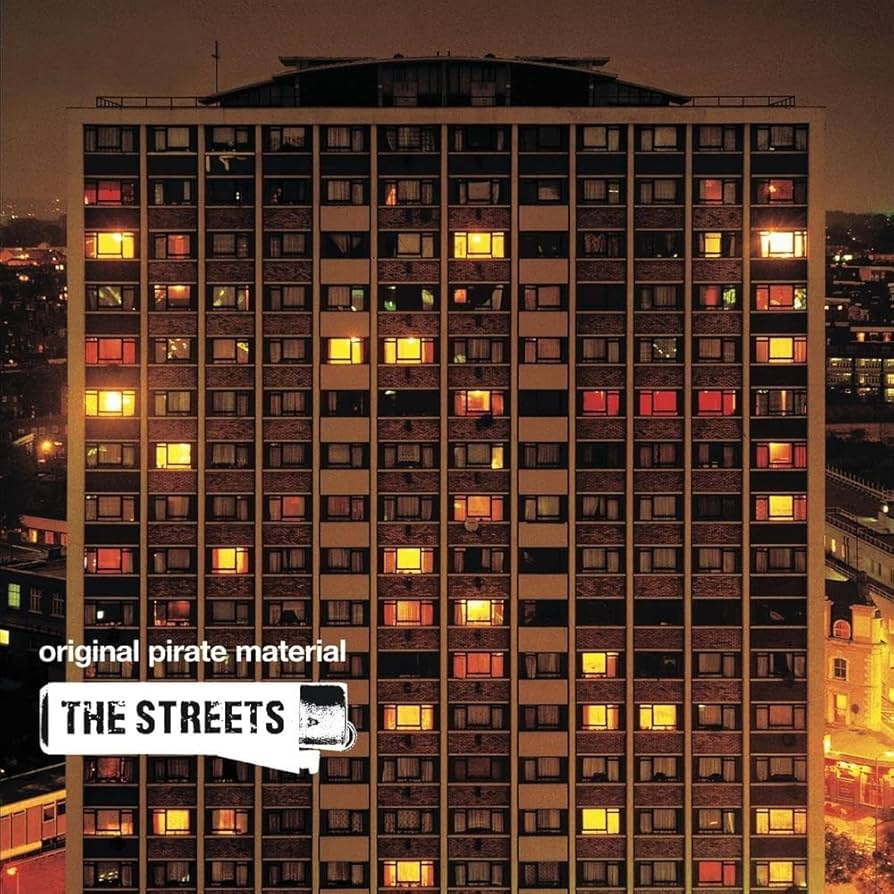

In the bedroom of a rented Brixton house in the early 2000s, one of the greatest and most influential British albums of all times was created. Equipped with a laptop, empty wardrobe, and Logic Pro, Mike Skinner wrote, recorded and produced Original Pirate Material. Released in March 2002, it would go on to be a UK garage and urban classic, the recipient of countless accolades, and nothing short of a masterpiece in conversational, gritty and genius lyricism.
Skinner is arguably not a rapper – but a storyteller. His ability to spin stories is, without a doubt, one of his biggest strengths. Telling tales with humour, wit and a sharp shrewdness, the Birmingham-born MC perfectly paints a picture of an urban Britain and its unique personality, where others may not think to look. Inspired by pirate radio stations, sweaty nightclubs and dirty kebab shops, and through a plethora of hooligans, hoodlums and louts, Skinner finds the beauty, the funny, and the intrigue in the Streets-described ‘sex, drugs and on the dole’ lifestyle.
The stories in Original Pirate Material are not only wonderfully told, but, in many cases, still extremely relevant more than 20 years on.
Take for example, The Irony of It All. It’s a track defined by its lyricism, comparing societal opinions and the legality of alcohol against marijuana use, through two characters: Terry, a boozed up ‘geezer’ who likes to get pissed and smash things up, and Tim, a seemingly polite, pleasant and intelligent young engineer who recreationally uses marijuana.
I could easily pen a 2000-word essay-style analysis on The Irony of It All, and unpack everything from the title of the track to its individual lyrics, or the musical styles when each character is ‘talking’ to the way Skinner delivers each line in different tones, styles, and levels of coherence. The very fact I can so easily conjure images and describe the personalities and characters of Terry and Tim just goes to show how well Skinner can tell a story; the song is just three and a half minutes long.
With the lyrics being so strong, it’s easy to overlook the production value of Original Pirate Material. It would not be the album it is – without not only the 2-step, UK garage, and electronic elements, but also the range of musical styles Skinner implements through his bedroom production; album opener Turn the Page uses a repetitive, orchestral motif to immediately create an immediate sense of tension and grandiosity, whilst Who Got the Funk, is, as the name suggests, written with funky guitars and syncopated electronic garage beats. Weak Become Heroes has a house feel to it, aligned to the track’s dancefloor themes, whilst the atmospheric synthesized instrumentals in Geezers Need Excitement create the perfect climate for Skinner’s ode to the kebab shop.
I feel there is nothing quite like Original Pirate Material. There is plenty of incredible hip-hop, garage, jungle and 2-step music out there, but nothing that quite achieves what this record does. Pounding bass, thumping drums and euphoric strings sits under potently wicked lyrics and conjured imagery of such urban bleakness and mediocrity -yet at the same time rooted in a remarkable character, flair and intrigue. There’s a stark simplicity about Original Pirate Material, but also a unique complexity – perhaps mirroring the stories he tells about the nineties and noughties youth. It’s the quintessential British culture, which doesn’t normally get the limelight, because why would it? It’s neither here nor there, but absolutely everywhere at the same time – and it’s the world of The Streets.
 Waxing Lyrical