

Guest feature – Josh Weir
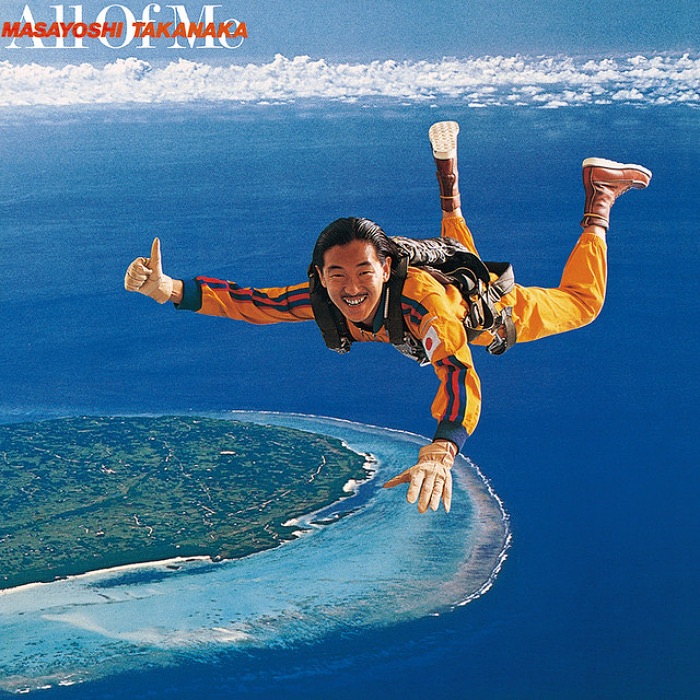
Masayoshi Takanaka is one of those artists who inspires me to live life to the fullest. I used to take music too seriously for its own good, leading to me becoming burnt-out to the point of hating music, dropping out of my music degree, and swapping to a STEM subject: a dire situation indeed. Throughout, only he had me clinging on to the idea of music being something to be enjoyed, and it was listening to him compulsively in the summer between my degree switch that slowly nursed my love of music back to full strength. If I had to sum up the music of this man in 3 words, they would be: freeing, joyous, and endearing.
Takanaka is often associated with the predominant surf movement that occurred in the 80’s in Japan, thanks to his innately tropical sound, bright countenance, and support of the carefree, optimistic lifestyle that surfers are known for. For a perfect example of this, look no further than Track 1, Oh! Tengo Suerte, from his debut album Seychelles, released in 1976. The track opens with a bright, 12-string guitar motif, featuring slide guitar and Wah to set the tone. After the intro, the song breaks into a bouncy bassline, laid back drums, subtle hammond organ, and Takanaka’s signature sound, taking the forefront to set the feel for his entire discography.
If this isn’t beachy enough for you, let’s fast forward to 1978 with his album Brasilian Skies, and have a look at Tracks 1&2, Beleza Pula (an idiom for the saying ‘it’s all chill’), and Brasilian Skies. Beleza Pula combines Takanaka’s sound with Brazilian instrumentation, including the best instrument in the world – the cuica. The song opens with a group of female singers singing the melody, before Takanaka takes over with his sliding mastery, instilling a STRONG desire for a Piña Colada. Track 2, Brasilian Skies, is possibly Takanaka’s ‘beachiest’ song: the bass is jumping; the percussion is understated but precise (take, for example, the offbeat cowbells); the electric piano swaps between cleverly placed comping and lighthearted montuno pattern; and Takanaka’s clean, melodic guitar melody perfectly glides across the band beneath him. To top it all off, the vocals are extremely endearing, with most of them either being vocalised, or the word “papaya” (I am deadly serious – here is him doing it live https://www.instagram.com/reel/DH8QEfes3rn/). And no good song is complete without the band cutting and everyone shouting “Whoo!”.
The final album I’ll talk about here is the album The Rainbow Goblins, released in 1981. This album is a concept album, based on a children’s book of the same name from the author Ul de Rico, and if you look up jollity in the dictionary, you get a link to this album. For me, one of the most delightful aspects of this album is the narrator, who reads to the listeners as they would to a group of children – an experience that really helps to sell the lighthearted joy of the album. This album is filled with moments of sheer musical brilliance that come together to create a rich soundscape. Track 2, Once Upon a Song, has the classic bouncy 12/8 feel that you can’t help but bob your head to as you listen. Track 3, Seven Goblins, has a bassline so funky that I personally can’t help but scrunch my face up for the entire song. Track 6, Soon, has one of the most lyrically executed guitar features I can think of, made to seem completely effortless on Takanaka’s front. Track 9, Thunder Storm, has the perfect combination in its harmony, galloping bassline, and persistent use of coordinated hits help build lighthearted tension – the kind you would expect from seven goblins getting excited about a storm because, as we all know, storms make the best rainbows.
To bring this spotlight to a close, I want to reiterate just how much Takanaka’s music has had on me: not just in my music taste and experiences, but in my life. Listening to Takanaka reminds me to not take life so seriously, and to take my time and enjoy the journey. So take some time today to sit back, relax, and listen to some Takanaka, and remember that life is meant to be enjoyed.
 Waxing Lyrical