

Sometimes, it feels impossible to describe an album, an artist, or even an individual song. There are times when there are no words to describe how the sounds in a way which justifies how they make you feel. I often feel that capturing these things can only really be achieved by immersing yourself fully in the art… or maybe I’m just a terrible writer.
Of course, I’d argue that’s generally the case with music. Perhaps the exception is some of the soulless, TikTok-algorithm-hunting slop which is forced upon us every now and again – so maybe I should specify good music. When it came to writing about my Album of the Week, I was at a complete loss of where to even begin. I think that’s a testament to the brilliance of this record.
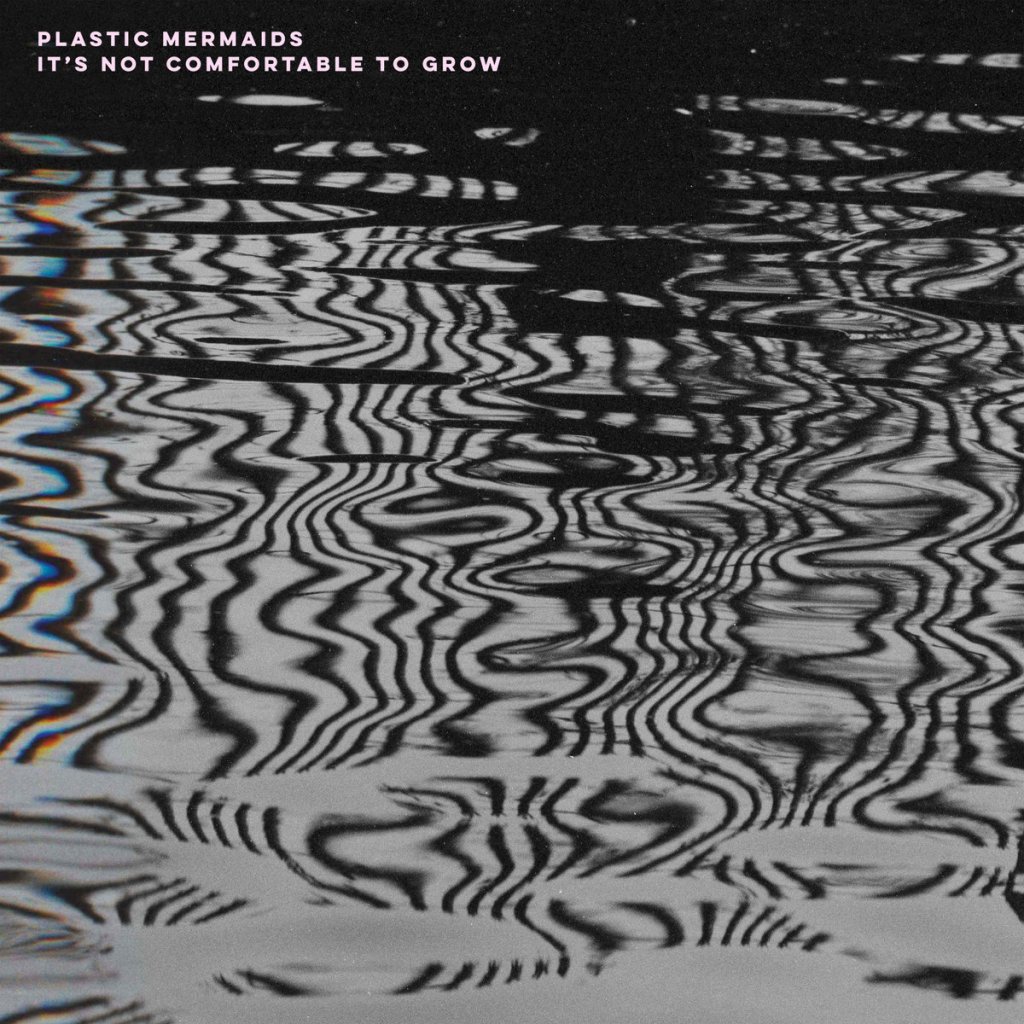
The album in question is It’s Not Comfortable To Grow, by Plastic Mermaids.
Perhaps some context to the band is the best place to start; Plastic Mermaids are a five-piece indie outfit from the Isle of Wight. The individual ‘mermaids’, if you will, are as eclectic as the music they produce: surfers, ornithologists, DIYers, marathon runners, and analogue studio builders, to name a handful of their interests. Jamie Richards, one of the two brothers who fronts Plastic Mermaids alongside Douglas Richards, spent two years building an effects pedal called Neon Egg – it’s been used by Bon Iver, Arcade Fire, War Paint, Kurt Vile, Granddaddy, Olafur Arnalds, Wilco, Chvrches, Bicep, Patrick Watsons, Hot Chip, Glass Animals, and Wayne Coyne (The Flaming Lips). The pedal creates a swirling, reverberating and lusciously rich soundscape – which maybe goes some of the journey to describing the sound of Plastic Mermaids.
It’s Not Comfortable To Grow is arguably a break-up album by definition. Douglas took on most of the writing responsibility for this project (Jamie was obviously too busy in his tech-cave, building a pedal), who was in the throes of a 7-year relationship coming to an end. Subsequently, a good chunk of the lyrics are very depressing – and that’s putting it lightly.
Mirroring the group’s nature and interests, a key aspect of the group’s sound is what makes it just so hard to describe: a wild ride. The album is neo-psychedelic, orchestral, and electronic – not just in separate periods throughout the 12 tracks, but somehow constantly all at once, throughout its entire duration. Compared to the rest of the band’s discography, it’s darker but still undeniably their rich, layered, and defiant sound – a product of the group, mainly Douglas’s, position in the world at the time.
The melancholy throughout the album is juxtaposed by often quite upbeat and driving instrumentals, which meddle together to create quite an eerie atmosphere at times. Introductory track, it’s not comfortable to grow, is a fairly simplistic construction, but an incredibly powerful start. It’s crashing drums and repetitive synths set a perfect tone for the record, whilst at the same time in no way at all preparing you for what’s to come. Disco Wings is a more complex track and is strikingly groovy, immediately preceding the fantastic transition between Marbles, Pt.1 and Marbles, Pt.2.
My personal favourite moment of this entire album, though, is Something Better. If we are climbing a musical mountain, here we reach its peak. This track is most definitely in the depressing break-up category of songs. It builds towards an incredibly passionate outburst by Douglas, which delivers versatility and phenomenal power. It’s part spoken word, part mental breakdown, to cathartically climax this album, and I think it summarises Plastic Mermaids brilliantly. Something Better doesn’t fit a mould and, at nearly six minutes long, it doesn’t tick the boxes for a radio or streaming hit. At the same time, there is no doubt that it is ten fold more beautiful than if they had taken that route; it’s music with heart.
The reason that Plastic Mermaids feels so difficult to describe, is simply because they are. Their whole identity is diversity and distinctiveness and their whole sound is reflective of such. There is no way words can do the complexities, intricacies, and nuances of It’s Not Comfortable To Grow justice – just listen to it!
 Waxing Lyrical